Your Grandparents Are Bored Out of Their Minds. And You’re Part of the Problem.
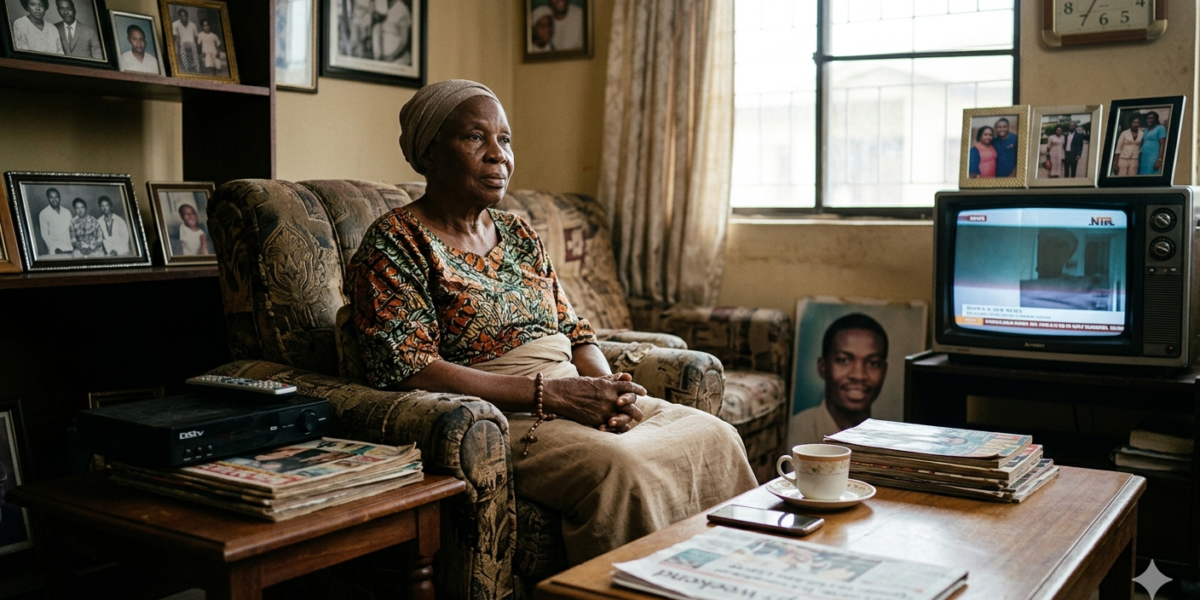
Go and visit your grandmother. Not at Christmas. Not when someone has died. Not when you need something. Just go. This weekend. She is sitting in that house, watching the same three channels on DSTV, talking to the same neighbours she has talked to for forty years, and wondering why nobody comes to see her anymore. And she will not tell you this because Nigerian grandmothers do not complain — they just quietly reduce their prayers for your enemies and add more for your wellbeing, and hope you figure it out.
We have done something quietly terrible to our elderly in the process of modernising. We have taken a generation that grew up in compounds where ten people were always around, where the oldest person in the house was also the most consulted person in the house, and we have relocated them to the retirement of invisibility. Children have moved out. Grandchildren are in Lagos or London. The house is quiet. And nobody has stopped to ask what that silence is actually doing to a person.
The research on elderly isolation is unambiguous — and it does not just apply to the West. Loneliness in older people is associated with cognitive decline, depression, weakened immune response, and significantly shorter life expectancy. Your grandmother watching NTA alone every evening is not just sad in the aesthetic sense. It is genuinely bad for her health in ways that rival smoking. We do not talk about this in Nigeria because we assume the extended family structure protects our elderly. It used to. It does not as much anymore.
Here is what we do not fully appreciate: the elderly are not just recipients of care — they are repositories of everything. Your grandfather remembers what this country looked like before independence. He has survived coups, currency changes, structural adjustment, the naira at two to the dollar, and he has opinions about all of it. Your grandmother knows every member of the family going back three generations, every land dispute, every story that explains why certain cousins do not speak to each other. That knowledge does not get uploaded anywhere. When they go, it goes with them.
There is also something more immediate. The elderly in your family are often the most honest people in it. Everyone else wants something from you or is managing your feelings. Your grandfather will look at your business idea and say “this one will not work” with the calm confidence of someone who has watched seventeen business ideas fail over seventy years. That is not pessimism — that is pattern recognition. We are not accessing it enough.
Call your grandmother this week. Visit if you can. Sit with her for longer than feels comfortable. Let her talk about things that seem irrelevant. Ask her what Nigeria was like in 1975. Ask your grandfather what he thought of Gowon. Ask what they were doing when the war ended. You will get a story that no documentary can give you. And they will get something that no medication can provide — the feeling that they still matter, that their presence is wanted, that the years they spent building something are not forgotten.
They are bored. They are lonely. And you are forty minutes away on Third Mainland Bridge, too busy to visit. Adjust that.